Tin tức
Lizaro Responsible Gambling and Compliance in Poland

Running an online casino in Poland requires more than a licence and a collection of games. It demands a documented system that holds every account within the limits set by Polish law and every player inside the boundaries they select for themselves. Lizaro Casino creates that system around verifiable controls, clear player records, and a transparent reporting path that regulators can audit at any time. This article details how those controls function, what they represent for an account holder, and why the same framework also safeguards the operator from regulatory risk.
Polish gaming law and the Unified Licensing Framework
Since the 2016 update to the Gambling Act, only one state-owned company may by law offer online casino games to Polish residents. All other operators must therefore run their platforms under a different licence that blocks access to Polish IP addresses. Lizaro Casino honours this boundary by geoblocking Polish traffic at the network level and by requiring every new account to pass an address verification step before any real-money play begins. The verification uses the national PESEL number together with a government-issued identity document, which eliminates any ambiguity about the player’s place of residence and ensures the platform compliant with the single-licence rule. In practice the geoblock is applied at the edge router so that even a VPN connection presenting a Polish IP is rejected if the PESEL check fails. The operator also keeps a daily log of blocked connection attempts that is reviewed each morning by the compliance team. Any sudden spike in attempts from a single IP range initiates an automated alert and a deeper inspection of the traffic source. This layered approach stops both accidental and deliberate circumvention while creating an auditable trail that fulfils the Ministry of Finance during scheduled inspections.
Personnel Development and Incident Reporting
Every member of the customer-support and compliance teams undergoes an yearly training module that addresses the current text of the Gambling Act, the provider’s internal procedures, and the referral route for possible problem gambling https://lizaroocasino.pl/. Conclusion is stored in a personnel database, and refresher sessions are planned automatically thirty days before the certificate runs out. When a support agent spots a player who displays signs of distress, the agent adheres to a predefined protocol that includes suggesting a referral to a recognised counselling service and, if appropriate, initiating a temporary account suspension pending further review by the responsible-gambling officer. The training materials are revised each time the Ministry issues new guidance, and the updated version is sent to all staff within five working days. Role-play exercises performed during the yearly session enable agents to practise difficult conversations in a managed environment, minimising the likelihood of missteps when real cases arise. Supervisors review a randomised of recorded calls each month to verify that the protocol is being applied consistently.
Depositing and Withdrawal Controls
Every deposit at Lizaro Casino is recorded with a time stamp, transaction method, and originating bank account. The same information is utilized to compute the player’s net position in real time, allowing the system to trigger an system alert when the weekly deposit amount reaches the limit the player set during sign-up. Withdrawals take the identical data route in reverse order. A withdrawal application above the daily limit set by the player or by the payment provider is held and checked by compliance staff before funds are disbursed. The complete procedure is designed so that the casino never moves money without a matching, time-stamped record that satisfies both company policy and outside audit standards. When a player initiates a withdrawal that goes beyond the automatic limit, the compliance manager analyzes the last thirty days of activity for any suspicious patterns such as rapid deposit-withdrawal cycles or frequent payment method switches. If the check finds no issues the request proceeds; if not the player gets a written notice and an invitation to discuss the matter by telephone. All such interventions are logged in the player’s ongoing compliance record.
Independent Audits and Supervisory Filings
Semi-annually an independent audit firm assesses a statistically significant sample of player accounts to check that deposit limits, self-exclusion flags, and game-integrity certificates are being applied correctly. The firm issues a letter of attestation that is filed with the Ministry of Finance together with the operator’s quarterly activity report. Because the attestation addresses both technical controls and procedural compliance, it provides the regulator with an external checkpoint that would be difficult to achieve through internal reporting alone. The audit scope also encompasses a review of the operator’s complaint-handling statistics and the average time taken to resolve escalated disputes. Findings that fall outside agreed tolerance levels are accompanied by a remediation plan with specific deadlines, and the subsequent audit examines whether those deadlines were met. The Ministry receives both the attestation letter and the remediation status in a single consolidated file, streamlining the regulatory review process.
Data Security and Encryption Protocols

Player data at Lizaro Casino is kept in a separate database cluster housed in a Tier-III data centre within the European Economic Area. All connections between the player’s browser and the platform are secured with TLS 1.3, and stored passwords are encrypted with the bcrypt algorithm using a per-user salt. Access logs are retained for twenty-four months, satisfying both the data-retention requirements of the Gambling Act and the shorter periods allowed under the General Data Protection Regulation. Annual penetration tests are conducted by an external firm, and the resulting report is provided with the licensing authority upon request. In addition the operator performs quarterly vulnerability scans that focus on newly disclosed security issues in the software stack. Any critical finding is resolved within seven days, and the remediation is documented in the next penetration-test cycle. Encryption keys are rotated every twelve months according to a documented schedule that is reviewed by the data-protection officer and filed with the internal audit committee.
Game Categories and Random-Number Testing
The site offers video slots, card and table games, live dealer studios, and instant win games. Each game holds an unique RNG certificate issued by an approved testing lab. The certificate lists the theoretical RTP and confirms that the game outcome cannot be manipulated by the operator after the game file is uploaded to the live server. Players can view the certificate ID directly on the game information screen, offering them an independent way to validate that the advertised RTP matches the audited version. This degree of transparency is not obligated by Polish law but is upheld because it lowers dispute rates and demonstrates a dedication to auditable fairness. In addition the operator performs an internal monthly review that evaluates actual game outcomes against the certified RTP ranges. Any variation beyond statistical tolerance activates an instant retesting by the outside lab, and if needed deletion of the game from the live catalogue until the problem is fixed. The findings of these in-house audits are summarised in the three-month compliance report delivered to the Ministry of Finance.
Identity Check and Membership Creation
Polish law sets the required legal age for casino gambling at eighteen. Lizaro Casino’s registration form will not proceed past the date-of-birth field unless the applicant provides a date that produces an age of at least eighteen years. The system then verifies the date against the PESEL number provided in the next step. If the two sources disagree, the account is frozen until the discrepancy is resolved by uploading a scanned identity document. This double check prevents both accidental underage registration and deliberate identity fraud, and it establishes an auditable record that the operator can submit to the Ministry of Finance during routine inspections. The same record is kept for five years after account closure so that any later regulatory query can be resolved without reconstructing historical data from backup tapes. Staff members who manage age-verification tickets get additional training on identifying forged documents and on the correct escalation path when fraud is detected. Every rejected application is recorded with a reason code that feeds into a monthly statistical report used to optimize the verification algorithm.
Handheld and Desktop Login Controls
The same responsible-gambling settings apply whether a player logs in from a PC browser, a tablet, or a smartphone. The mobile app does not store credentials or payment details locally; instead it asks for a short-lived token from the backend at the start of each login session. If the handset is marked lost or stolen, the player can invalidate all active tokens through the online account panel, right away ending any open sessions on that handset. This centralised token system avoids the need for a distinct mobile self-exclusion process and keeps the control logic uniform across every access channel. The application also respects the device-level “do not track” setting so that players who wish not to receive customised marketing messages can apply that preference without getting in touch with support. When a player moves to device or OS version the token request includes a device signature that is matched against previously verified hardware. Any difference triggers an further verification step before the session is allowed to continue, reducing the risk of token theft or session takeover.
Self-Exclusion and Monitoring Tools
Setting Individual Deposit Limits
During the initial login after registration, the account dashboard guides the player to pick a daily, weekly, or monthly deposit ceiling. The chosen figure is stored in the same database record that authorises real-money play. Any subsequent deposit attempt that would go beyond the stored ceiling is automatically declined with an on-screen message that also offers a direct link to adjust the limit. Because the limit is enforced at the payment-gateway level, it cannot be bypassed by opening a second browser window or by contacting customer support for a manual override. Players who later opt to increase a limit must wait twenty-four hours before the change takes effect, a cooling-off period intended to discourage impulsive adjustments made during a losing streak. The same waiting period holds when a player chooses to remove a limit entirely. All limit changes are recorded with a timestamp and the player’s IP address at the moment of the request, creating an additional layer of accountability that can be examined during an audit.
Gaming Reminders and Cool-Off Periods
An activity monitoring timer runs as a background process of every game session. After sixty minutes of continuous play the screen dims and displays the elapsed time, the net amount won or lost, and two buttons: “continue” or “take a break.” Choosing the break option instantly signs the player out and prohibits re-entry for the remainder of the cool-off period chosen in the account settings. The cool-off may be configured to twenty-four hours, seven days, or thirty days. Once activated, the period cannot be reduced, guaranteeing that the decision made in a calm state stays valid even if the player later has second thoughts. The timer resets only after the player has been logged out for at least fifteen minutes, avoiding circumvention through rapid log-in and log-out cycles. Session data captured during each reality-check event is aggregated anonymously and used to improve the timing and wording of future messages, guaranteeing that the intervention stays impactful without becoming intrusive.
Self-Exclusion Registry Integration
Lizaro Casino forwards the particulars of every self-exclusion request to the national register kept by the Ministry of Finance within twenty-four hours. The transmission uses an encrypted API specified by the regulator, and the acknowledgement message from the register is recorded in the player’s permanent record. While the exclusion is in effect, any attempt to open a new account with the same PESEL number is refused at the registration stage, closing the most common loophole that self-exclusion programmes face. The operator also runs a weekly reconciliation that matches its internal exclusion list against the national register to catch any discrepancies arising from transmission errors or timing differences. When a mismatch is discovered the compliance team reaches out to the register directly to verify the correct status before allowing any further account activity. This double-check procedure adds a few minutes to the weekly workload but practically eliminates the risk of an excluded player re-entering the platform through administrative oversight.
Deposit & Withdrawal Methods and Processing Times
Polish customers at Lizaro Casino can deposit funds through wire transfers, popular e-wallets, and prepaid options. Bank transfers typically clear within one business day when sent from a Polish IBAN. E-wallet deposits are credited within minutes, but the identical method used for deposit must be used for withdrawal, satisfying the “same-account” rule required by the anti-money-laundering regulations of the Gambling Act. Processing times for withdrawals span from one day for e-wallet requests to 5 business days for standard bank transfers, based on the volume of manual checks initiated by the size of the request or by the player’s latest activity. The operator publishes an current list of expected settlement times on the cashier page so that players can manage their cash-flow accordingly. If a withdrawal is postponed beyond the stated timeframe the player gets an automatic notification accompanied by a updated projection and a reference for further questions. bleacherreport.com This transparency decreases the number of support tickets and demonstrates the operator’s commitment to predictable service levels.
Educational Resources for Players
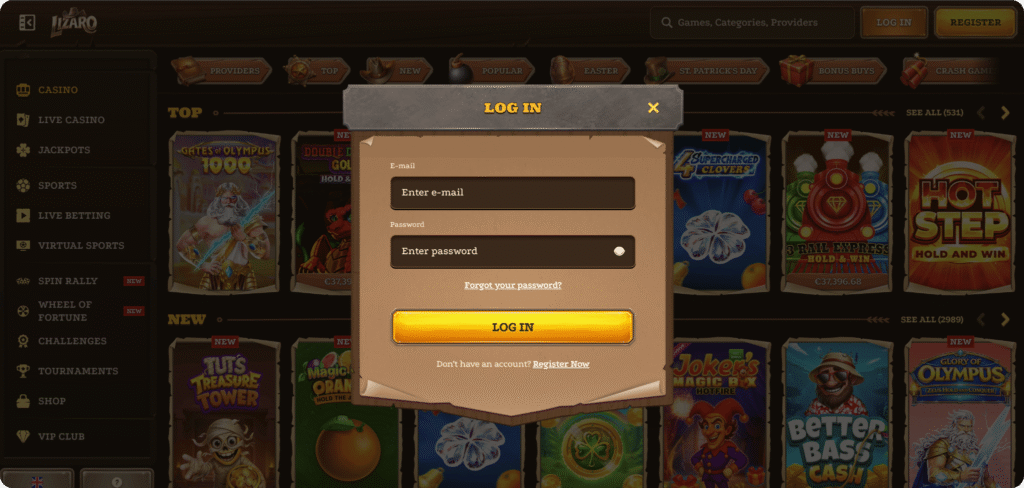
Within the account interface, Lizaro Casino hosts a library of concerned pieces that describe the workings of popular casino games, the definition of RTP percentages, and the warning signs of gambling-related harm. Each article ends with a link to the national helpline and to the operator’s own responsible-gambling contact form. The materials are evaluated quarterly by a clinical psychologist to guarantee that the language stays non-judgmental and factually accurate, reducing the risk that players will ignore the content as mere corporate messaging. New articles are included whenever a game category is introduced or when regulatory guidance changes the way risk information must be presented. Usage statistics are compiled anonymously to identify which topics draw the most interest, permitting the editorial team to concentrate on updates that tackle real player concerns rather than assumed needs. The psychologist also reviews player feedback provided through the contact form and proposes wording changes when comments show that a particular explanation has caused confusion.
Conflict Resolution and Escalation Process
When a player considers that a game outcome or account restriction has been applied wrongly, the first step is to submit a ticket through the in-app help centre. The compliance team has seventy-two hours to deliver a written explanation that references the specific game log or policy clause. If the player remains unhappy, the case is automatically forwarded to an external mediator whose decision is binding on the operator but not on the player, preserving the player’s right to bring the matter through Polish courts if necessary. All escalated cases are reported in the quarterly report to the Ministry, forming an additional layer of transparency. The mediator’s written decision is stored in the player’s file together with any corrective action taken by the operator. If the same type of dispute occurs repeatedly the compliance officer initiates an internal review to determine whether a policy or game parameter needs adjustment. The outcome of that review is reported to the Ministry in the next quarterly filing, completing the feedback loop between individual complaints and systemic improvement.
